by Robin Spano
For years, bug spray has been one of those “other people use it” items living in the basement of mind. I used it as a kid at camp, or in cottage country — especially early in the season, when mosquitoes and black flies would eat you alive if you didn’t have it on. But as I grew older, I grew more wary of the chemicals than I was annoyed by insect bites, and ditched it from my summer routine. Mosquitoes weren’t harmful — I live in Canada, where they didn’t bring diseases, really — they were just itchy nuisances.
Fast forward to Summer 2026, when the bugs are changing the game.
We got a packing list for my daughter’s summer camp, and for the first time in decades, I didn’t immediately dismiss “bug spray” from the list. That’s because new articles have been popping into my news feed — about new diseases, and higher positive test rates for the old ones, in our local summer insects. As our climate warms, mosquitoes and ticks are expanding into new areas, staying active for longer seasons, and carrying more diseases than they used to.
I don’t want to spray harsh chemicals onto my daughter’s skin — or into the ecosystem when those chemicals wash off — but I also don’t want her to catch Lyme Disease or West Nile (or anything awful at all).
So, in search of a good solution that might repel critters without harming her health or the planet, I did a little research. What I found surprised me (in a good way).
Why Bugs Are Becoming a Bigger Deal
Mosquitoes and ticks aren’t just pests anymore — they’re tiny disease delivery systems.
Mosquitoes can spread:
- West Nile virus
- Eastern Equine Encephalitis (EEE)
- Dengue fever
- Zika virus
- Chikungunya
- Malaria (still rare in North America, but local cases have begun appearing again)
Ticks can spread:
- Lyme disease
- Anaplasmosis
- Babesiosis
- Ehrlichiosis
- Rocky Mountain spotted fever
- Powassan virus (rare but serious)
Many of these illnesses were once uncommon in Canada and much of the northern United States. Today, warming temperatures are allowing mosquitoes and ticks to survive farther north and remain active for more months of the year. (We get them in February here, which makes for a pretty long season.)
My takeaway: Yes, it really is time to reconsider my casual dismissal of bug spray.
I started by taking a look at the options that are currently out there:
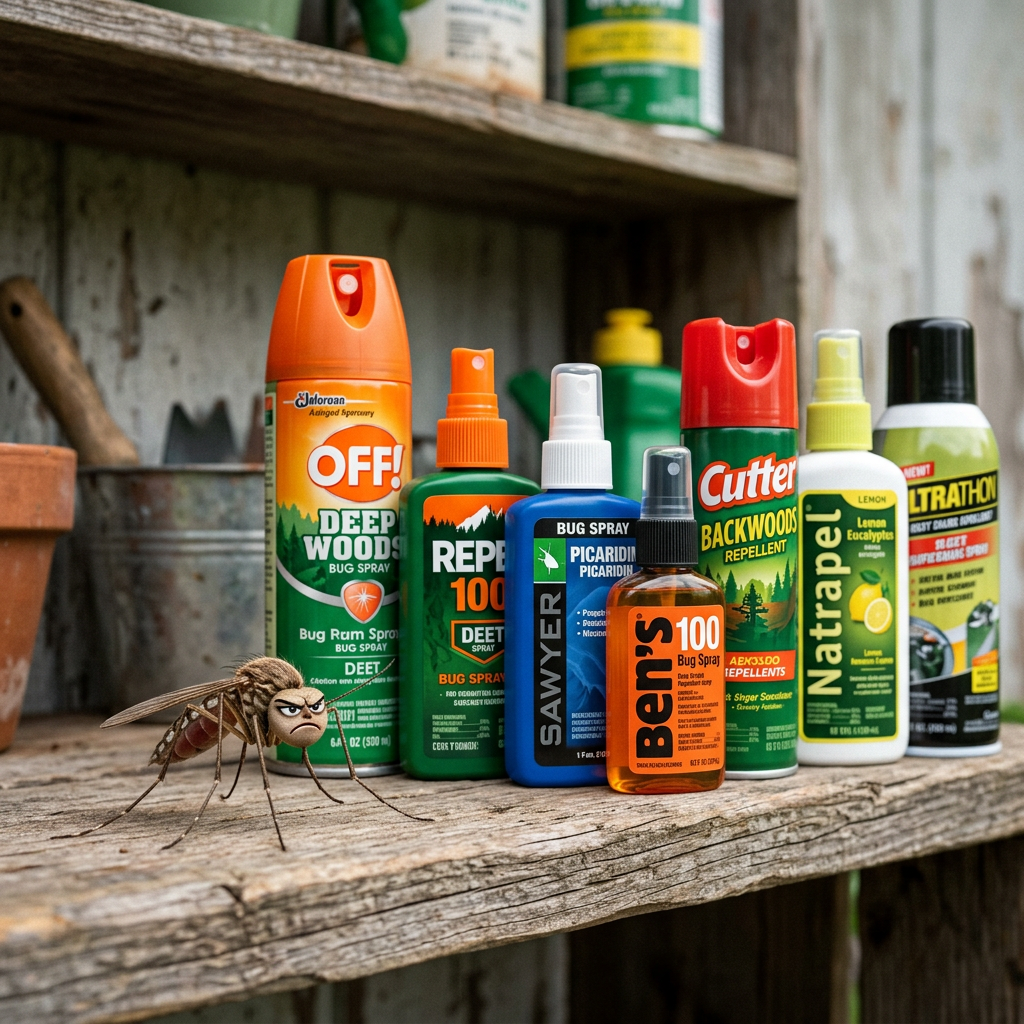
The Heavyweights: DEET and Picaridin
Walk down the insect repellent aisle and you’ll notice two ingredients showing up again and again.
DEET
DEET has been protecting hikers, campers, gardeners, and families for more than 75 years. Brands like OFF and Muskol have been around for years and do the job well.
Contrary to popular belief, it doesn’t kill mosquitoes. Instead, it interferes with the insect’s ability to detect the chemicals our bodies naturally release, making us much harder to find.
Pros
✔ Extremely effective
✔ Long-lasting (especially at higher concentrations)
✔ Excellent protection against both mosquitoes and ticks
Cons
While DEET has been studied extensively and is considered safe when used as directed, it isn’t perfect.
It can:
- damage certain plastics and synthetic fabrics (but we’re not wearing those anyway, right…?)
- feel greasy on the skin
- irritate eyes and sensitive skin
- persist in the environment after washing off
- repel humans, too with its sharp, solvent-like odour (though I kind of love it for the nostalgia it evokes of summers at the lake)
Scientists continue studying its environmental impacts, particularly in waterways where traces have been detected. But when I looked it up on EWG — one of the most discerning, critical organizations when it comes to approving or condemning chemicals — I was surprised to see they support the use of DEET as a safe and effective alternative to contracting one of the above diseases.
Picaridin
Picaridin (sometimes called icaridin) is the newer star of the bug spray world.
Originally developed by Bayer in the 1980s, it was designed to provide DEET-level protection without some of DEET’s drawbacks.
When I hear Bayer, my mind jumps to Monsanto, and my bias is to be VERY suspicious (if not downright hostile). But just like DEET, this synthetic chemical has the support of the EWG working group as a safe and effective option. (For context, EWG is actively against Roundup and other Bayer/Monsanto concoctions — so their advocacy for this particular chemical is meaningful.)
Like DEET, it works by confusing insects’ ability to locate humans.
Pros
✔ As effective as DEET against mosquitoes
✔ Excellent protection against ticks
✔ Nearly odorless
✔ Doesn’t damage plastics or outdoor gear
✔ Less greasy
✔ Generally gentler on sensitive skin
Many outdoor experts now recommend picaridin as their first choice because it combines excellent performance with a nicer user experience.
Cons
Picaridin is generally considered to have a lower environmental impact than DEET, but it is still a synthetic pesticide.
Like any chemical insect repellent, it eventually enters wastewater when washed from our skin and clothing, and scientists continue studying its long-term environmental effects.
What About Natural Bug Repellents?
My normal inclination is to avoid synthetic chemicals altogether, and there are a few options.
The catch?
They don’t last nearly as long.
Oil of Lemon Eucalyptus (OLE)
(Not to be confused with the more common lemon eucalyptus essential oil.)
This is the standout.
Oil of lemon eucalyptus contains a naturally derived compound called PMD that has been shown in multiple studies to provide protection approaching lower concentrations of DEET.
For many people, it’s the best natural alternative currently available.
I haven’t tried it yet, but it’s now on my shopping list.
Citronella
Those strange smelling candles that people burn when they’re sitting outside, in the hope they’ll repel mosquitoes.
It can work as a body oil, too…for a little while. Protection often lasts less than an hour before another application is needed.
So yes, more natural. But not nearly as effective as I’d like to feel confident on a hike through the forest.
Also, I kind of hate the smell — but that’s a matter of taste.
Other Essential Oils
You’ll also see natural bug sprays containing:
- cedarwood
- peppermint
- lavender
- geranium
- lemongrass
- rosemary
- thyme
Many have shown some mosquito-repelling ability in laboratory studies.
The problem is consistency.
They evaporate quickly, vary widely between products, and usually don’t provide reliable protection against ticks.
Maybe better than nothing, but not something I want to rely on (or even spend my money on) as a go-to.
Don’t Forget Your Clothes
Long sleeves, lightweight pants, socks, and light-colored clothing all make it harder for ticks and mosquitoes to find you.
For hiking in tick country:
- tuck pants into socks
- stay on trails
- avoid brushing through tall grass
- perform a tick check when you get home
These simple habits often reduce your exposure more than any spray can.
What About Permethrin?
Permethrin is different. This is one I would avoid unless you’re deep-diving into a territory where disease rates are highest and you’re desperate for the best possible protection.
Instead of being applied to your skin, it’s used on clothing and outdoor gear. Unlike DEET or picaridin, it actually kills ticks and mosquitoes that land on treated fabric. It’s incredibly effective for camping, hiking, hunting, and field work.
It’s harmful, though. Permethrin is classified by the EPA as neurotoxic and a likely carcinogen. Research indicates potential links to allergies, immunotoxicity, and long-term liver damage.
That said, because it’s very effective against tick bites, even the EWG considers permethrin-treated clothing a valid occasional measure in high-risk areas, provided the clothing is bought pre-treated or applied with strict precautions.
So…What’s the Most Sustainable Choice?
I think this is a cool case of we’re okay with whatever works best. The common, effective chemicals aren’t nearly as bad as I’d thought.
The most sustainable choice is probably the oil of lemon eucalyptus — which I now have on my shopping list and I’m curious to try it out for days when I’m spending a few hours outside.
But for hiking in the forest? I’ll absolutely start using the harsher stuff, now that I know it’s not so terrible.
What We Packed For Camp
DEET. We went to London Drugs and found two choices: DEET as a regular spray, and Picaridin as an aerosol. We decided to avoid the aerosol and go with the simpler spray bottle — though Picaridin is the chemical I’ll choose next time, when I can find it as a regular pump spray.
It was a pleasant twist of fate that the chemicals that work are also sanctioned by the grumpiest eco-critics out there.
Because I’m not willing to give up nature just because the bugs have changed the game.


Join the conversation