There are three factors in play when I go to the grocery store — four if my daughter is with me, providing a constant stream of negotiation and opinions:
- Human Health
- Price
- Planet Health (I’d love to prioritize this higher than price, but groceries are expensive these days!)
Here are some guidelines for my grocery shopping philosophy:
1. Buy Whole, Unprocessed Foods
- Buy Food In Its Natural State: Foods in their natural state have more nutrients (the good stuff) and less additives (the harmful stuff) than their refined counterparts. From the earth’s point of view, whole foods use less (or no) packaging, and have a lower carbon footprint to produce them.
- Check the Ingredients List: When you do buy packaged food, look for short ingredient lists comprised of foods you recognize. The less weird chemically sounding items on that list, the less processed the food likely is. Less bad stuff for you = less chemical pollution for the planet.
- Avoid Highly Refined Ingredients: Foods with refined grains, added sugars, and artificial additives are typically more processed. Opt for whole grains, natural sweeteners, and foods without artificial colors and preservatives.
2. Be Picky About Meat
There’s no way around it: meat and dairy farming are heavy greenhouse gas producers. Many of my friends choose to eat vegetarian or vegan diets for this reason. I appreciate them — I appreciate everyone who makes decisions with the greater good in mind — but I believe that humans are natural omnivores, and I feel healthier with meat in my diet at least some of the time. Here’s how I try to make it as sustainable as I can:
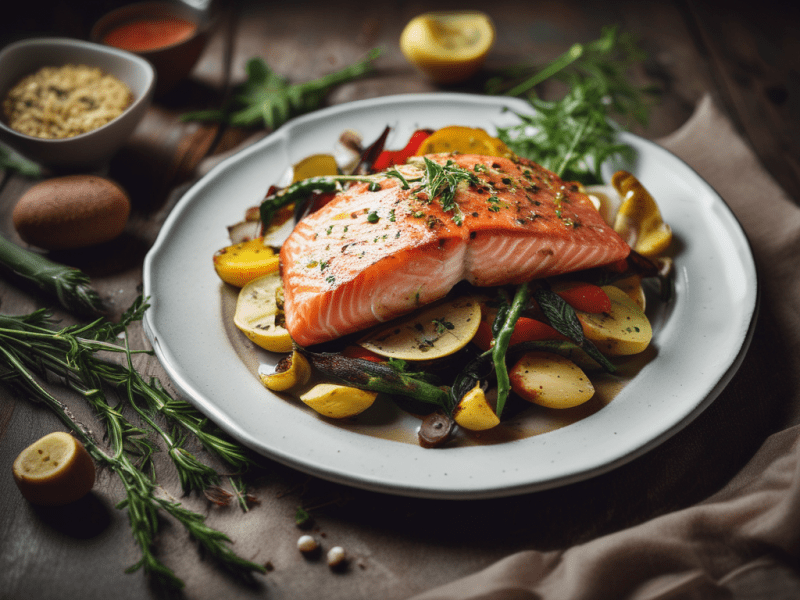
- Minimize Red Meat: While my husband loves a good animal protein each night for dinner, my daughter and I are very happy to eat vegetarian meals (or leftovers) for breakfast, lunch, and all day long. We also keep beef to a minimum, and eat more fish than any other kind of animal protein.
- Buy From Good Butchers who advertise that their meat is free of hormones and antibiotics. In Vancouver, we love Beefway Meats. They might not tell you the name of each animal they butcher, but they know what farm it came from.
- Choose Organic or Grass-Fed Beef: It hasn’t eaten any GMO corn. I love the meat from Hop Creek Farm in Squamish, where their pork and chickens eat organic, non-medicated food, and their beef and lamb are grass-fed and grass-finished.
- Support Regenerative Agriculture: This is a beautiful farming method that restores the land’s health and biodiversity. It’s a lot more expensive, but farms like Spray Creek Ranch in Lillooet are leading the way in sustainable farming — and we love the way meat tastes when it’s that pure.
3. Up With Plants
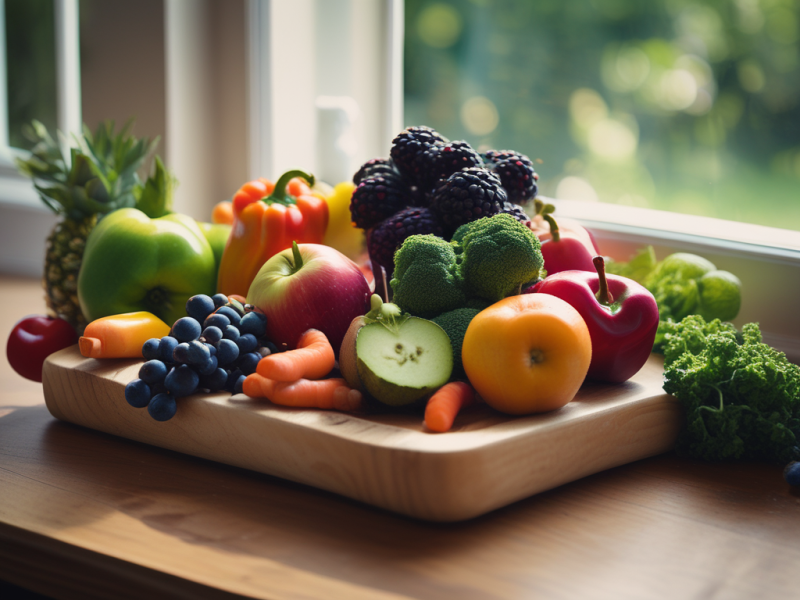
- Focus on Vegetables and Fruits: Incorporate a variety of colorful vegetables and fruits into your meals. They’re super for your body, and have a cleaner environmental footprint. Bonus points for organic.
- Choose Whole Grains: Opt for whole grains like quinoa, brown rice, and oats. Go for sprouted when it works. They’re cleaner and healthier than their refined cousins.
- Explore Alternative Proteins: Since less really is more when it comes to meat, try to include some plant-based proteins into each day, like beans, lentils, and tofu.
4. Down With Packaging
- Lose the Plastic: It’s crazy how hard this is to do. I’m not plastic-free, but I make the shift wherever I can without driving myself crazy. Every plastic-free choice is a message to food producers to ditch the plastic from the production line.
- Bring Reusable Bags: It’s not just the bag that holds your groceries that counts. Consider bringing reusable produce bags (old ones from previous produce, or cloth bags you can use again and again) to gather your apples and mushrooms and other loose produce.
5. Support Sustainable Seafood
- Check for Certifications: Look for certifications like MSC (Marine Stewardship Council) or Ocean Wise, to ensure it’s sourced sustainably.
- Aim Low: Choose fish lower on the food chain, such as sardines or anchovies, which often contain less pollutants. (Apex predators, like sharks, are among the most full of toxins.)
6. Choose Organic and Local
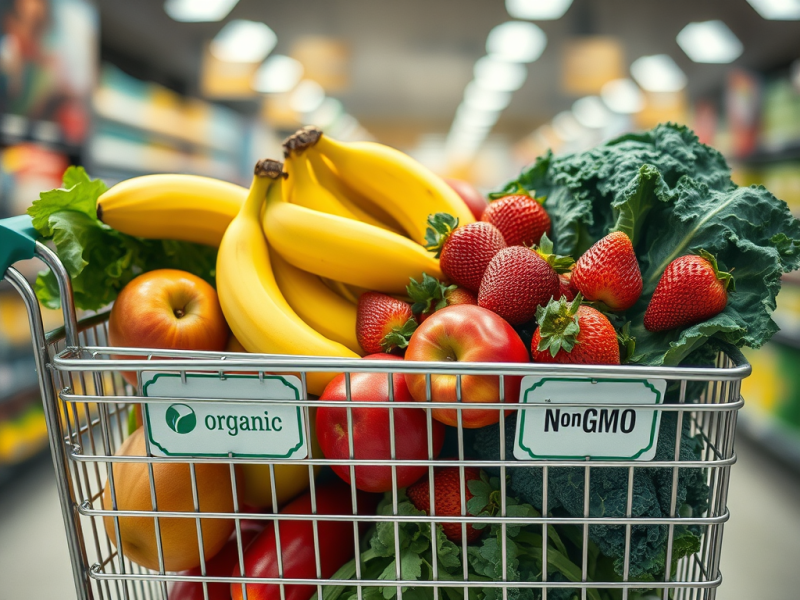
- Buy Organic: With grocery prices what they are, organic everything is unrealistic for most families (including mine). But organic farming avoids synthetic pesticides and fertilizers — and most importantly, glyphosate — the herbicide used to treat most GMO crops. If you’re curious, I made a cheat sheet for the foods I buy organic and the ones I relax about.
- Support Local: Great for your local economy and carbon footprint. You’ll also get fresher food that tastes better.
7. Support Stores Who Only Sell Good Food
- Natura Market is a wonderful online store with a curated selection of foods they consider “clean.” With free delivery in Canada over $59, I find this a great place to stock up on healthy pantry items.
- SPUD is a grocery delivery company that has a comprehensive list of banned ingredients — harmful things you’ll never find in any of the food they sell. It’s expensive, but has great customer service and they save a trip to the store.
- Whole Foods also has a banned ingredient list — though they do allow GM corn, so you still have to be a savvy shopper there, but it’s much cleaner than any other big chain grocery store.
8. Grow Your Own
- Start a Garden: Even a small container garden can provide fresh herbs, vegetables, or fruits. It’s a rewarding way to reduce your environmental impact and eat fresher food. We’re super new to this game — we’ve been growing herbs and microgreens indoors in the winter, and plan to expand our experiment zone to the outdoors this summer.










 Sustainable Steps
Leave a comment