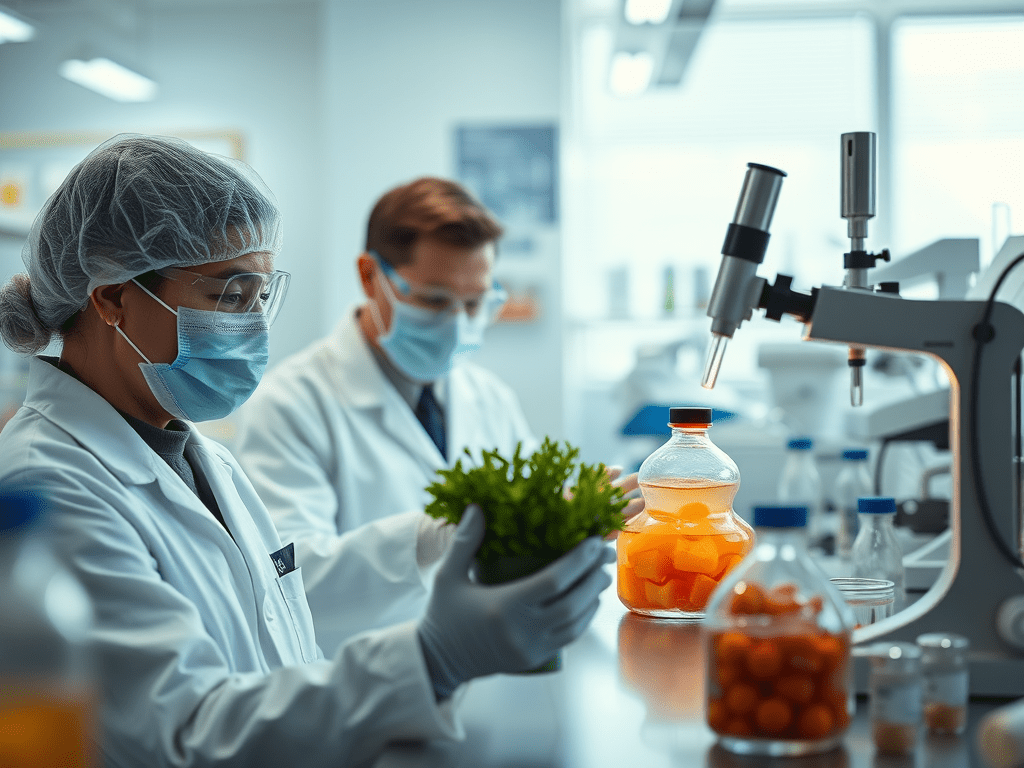
What in the world are GMOs?
GMOs, or Genetically Modified Organisms, are living creatures whose genetic material has been altered in a lab. This could involve splicing genes from one species into another, or enhancing a seed to make it resistant to pests, disease, or harsh weather.
Are they good or bad?
On the surface, the concept is noble. There’s an interesting timeline of the history of GM science on the FDA’s website, which shows the first GMO product available for commercial sale to be human insulin to treat diabetes. That was 1982.
Fast forward to 1996, when the Roundup Ready soybean hit the market. Two years later, Roundup Ready corn joined in, followed by canola, sugar beets, cotton, and alfalfa.
The official story goes that Monsanto developed these seeds to help farmers — to strengthen crops against viruses, insects and extreme weather — to give a more consistent yield, to improve both global food security and the financial security of farmers.
They work by resisting Roundup — a vicious herbicide that kills nearly every plant in its path — while it’s sprayed all over the field. The desired crop thrives while interfering weeds wither around them.
In theory, this is great. High yield for farmers, lower prices for consumers. Everybody wins.
The plot thickens when we learn what’s in Roundup.
The main ingredient is a herbicide called glyphosate. It’s banned in Quebec, and in several countries worldwide, because it’s been linked to blood cancers and hormone disruption. But it’s not only legal in most of Canada and the United States — it’s used so widely that most of us eat it every single day.
Is that a problem? Does the glyphosate get into the food?
Maybe. Reports are ambiguous.
Both Health Canada and the American Food and Drug Administration endorse all GMOs as non-harmful. Some studies, including one from Harvard, concur that they’re okay. But other studies from major universities have found solid links between consumption of GM foods and serious adverse effects.
For a deep dive into why a superficial study might find glysophate-sprayed crops non-harmful, but longer term studies show the risk of chronic exposure is terrifying, the U.S. National Institute of Health posted this study. It’s a complex and interesting read — my takeaway is that the longer and more frequently someone is exposed to these products, the worse the cumulative effect is proven to be on their health.
Animal testing has also linked certain GMOs themselves (not just the herbicides they resist) to compromised immunity, fertility, and insulin regulation, as well as accelerated aging and changes to internal organs. Pigs fed genetically engineered feed are more prone to stomach inflammation, endometrial cancer, and infertility.
There’s enough evidence to convince other governments around the world to ban glyphosate and its accompanying Roundup Ready GMOs. There’s also enough to convince me that I want to avoid it.
Are GMOs harmful to the planet?
The herbicides sure are. They’re harming birds and insects and other animals who snack on crops — which has ripple effects on the biodiversity everywhere non-organic farming occurs. A University of Minnesota study identified glyphosate as one of the main reasons the monarch butterfly population is suffering worldwide.
Pesticides contaminate the air near farms, threatening the health of children and families.
The seeds themselves also travel in the wind — corrupting the crops of farmers who are trying to grow organic.
If GMOs are everywhere, how can we avoid them?
With an unlimited budget, it’s easy to avoid GMOs — only buy organic everything, or look for the Project Non-GMO logo. But financial sustainability is key, too. Most of us can’t afford to feed our families only organics.
Here’s what I do when I’m shopping:
(a) Choose organic or non-GMO for high risk foods. The foods I’m strictest about are corn, potatoes, and apples. I also try to be careful with bread (because of the yeast), zucchini, and sugar. Papaya, canola, soy, and alfalfa are also on the high risk list. (I just don’t buy them much.)
(b) Relax about other foods. Maybe later on my path, I’ll be strict about every ingredient that enters my shopping cart being organic, but for now, I’m relaxed about the source of my bananas, oranges and other citrus fruits, tomatoes, broccoli, wine, canned beans (kidney beans, black beans, chick peas, etc.) — and most other food that we haven’t discussed.
(c) Read labels for all packaged foods. When I buy processed foods, I make sure that any corn, soy, canola, and sugar are listed as organic. The non-GMO label is even better peace of mind when an ingredient list includes things I can’t pronounce.
I made a simplified cheat sheet for the grocery store (for my own reference after standing in the produce aisle with a swimming head and Google too many times)!
If they’re so bad for us, why aren’t GMOs banned in North America?
I have noooooo idea. Powerful lobbyists? Governments who don’t realize how important this is for public health? Or maybe the science really is inconclusive. But if it’s inconclusive, I feel like it should be off the table until we know, not the other way around. Or at least labeled something like, “This food is a scientific experiment. Results are not yet known. Consume at your own risk.”
Even if GMOs aren’t banned, it seems that the verdict is in loud and clear about the harmful effects of glysophate. If I were a lawmaker, I’d push for a universal ban on it.
Another option is for the government to stop subsidies to farms who use Roundup. If we only subsidize organic farmers, regenerative farmers, and all other kinds of farming practices that don’t rely on GMOs, herbicides, and pesticides, the price of clean food would come down to a point where we could all afford it.
How can we change the system so that we can trust the food in the grocery store?
The first way is to vote with our wallets. They won’t grow what we won’t buy.
We can also try to reach the decision-makers.
We can write to our local politicians to share our concerns and ask them to introduce the conversation in parliament. Whether they choose to ban the bad stuff or divert subsidies toward the good stuff is up to them.
We could start a petition to gather support, and send that to our local representatives. Make sure you word the petition in a friendly way, with clear, positive steps you’re asking your politicians to take.
At election time, we can ask questions of all our candidates and scour their platforms before voting to see if we can cast a vote for someone who understands this has to change. Sometimes, parties have non-GMO policy written into their platform.
To learn more, check out the Non-GMO Project website.

 Sustainable Steps
Leave a comment