For most of my life, I’ve been more worried about the chemicals in sunscreen than I have about rays from the sun. My summer motto has generally been that the best sun protection is a good base tan. But at the ripe old age of (almost) fifty, I’m starting to see that the smart path might be more nuanced than that. Skin cancer is real, as both of my parents and three of my grandparents can attest to. And many companies have risen to the challenge of developing sunscreens that avoid the toxic chemicals and still protect our (and our children’s) skin from the harmful effects of too much sun exposure.
In this post, we’ll explore which old school ingredients to avoid when choosing sunscreen, what to look for on a label instead, and highlight some brands that are both safe and effective so you can go forth and enjoy the summer.
Ingredients to Avoid
Some ingredients that were common in the sunscreens of my youth (anyone remember PABA?) have been officially recognized as NOT safe and effective, and have already been phased out of use in commercial sunscreens.
But several questionable chemicals are still in play. The main risks they pose are:
- hormone disruption in humans when they’re absorbed into the skin
- environmental damage in marine ecosystems when they’re washed into the sea
When reading a label, the ingredients that will make me put a product back on the shelf are:
1. Oxybenzone
This is probably the worst offender. Oxybenzone is an effective broad spectrum UV filter, but studies show a strong probability that it can damage reproductive health. I’ve already reproduced — but I definitely want to keep this off my 9-year-old daughter’s skin.
Oxybenzone is also harmful to coral reefs, contributing to coral bleaching and the decline of marine biodiversity.
The EU recently determined that oxybenzone was unsafe in the amount it was being used, so it lowered the amount that is allowed into each product. (Really? Lowered? Does that mean there’s a safe number of times per year it’s okay to use the stuff? I think steering clear sounds like a smarter plan.)
2. Octinoxate
Same two issues. Octinoxate is an effective UVB filter (not broad spectrum, but does protect from the rays that cause sunburn), AND it can also disrupt hormones and pose risks to reproductive health. It’s also known to damage coral and marine life.
3. Homosalate
While not as high a risk as the first two, homosalate is also absorbed through the skin and has some link to hormone disruption, which caused the EU to recently lower the amount that’s allowed into sunscreen. (Same as above — if it’s a risk at all, why not run with one of the alternatives that doesn’t use it?)
4. Parabens
Parabens are added as preservatives, and they’re great at keeping mold and bacteria from developing — which preserves the shelf life of a product. BUT they’re known to mimic estrogen, disrupting hormonal balance and leading to various health issues, including cancer. They can also (as one might predict based on their harmful effects on humans) have detrimental effects on aquatic ecosystems.
These tend to show up on ingredient lists as long names ending in -paraben. (Propylparaben, isopropylparaben, etc.) They’re in a LOT of different kinds of beauty products, and I try to avoid them across the board.
5. Fragrance
In the skin care industry, fragrances are considered trade secrets — which means the company has no responsibility to disclose what’s in them. Many synthetic fragrances are skin irritants (or worse) and can be harmful to aquatic life when washed off in waterways. I would avoid any product that lists “fragrance,” and instead opt for those who list natural plant extracts (like coconut or peppermint or orange peel oils) that can give a product scent without having to be mysterious about it.
6. Sulfates
While not as nasty as some of the other culprits in this list, sulfates can irritate skin and strip away natural oils, leading to dryness and irritation. They can also clog pores and leave your skin prone to breakouts.
7. Phthalates
Phthalates enhance a product’s texture, but research indicates that they can disrupt endocrine functions, leading to hormonal imbalances, reproductive issues, and developmental problems in humans. They also contaminate the marine environments they leach into.
What to Look For Instead
A good rule of thumb is to look for active ingredients that are minerals rather than chemicals, and to look for additives that are natural rather than synthetic.
The American Food and Drug Administration tested 16 ingredients commonly used as sunscreens, and while they didn’t ban those listed above, they confirmed only two as both safe and effective: zinc oxide and titanium dioxide.
1. Zinc Oxide
Zinc oxide provides broad-spectrum protection and is less likely to irritate the skin. It sits on the skin’s surface, reflecting harmful UV rays, and is safe for coral reefs.
2. Titanium Dioxide
Titanium dioxide is another safe mineral that offers effective UV protection. It’s often used in combination with zinc oxide for enhanced coverage.
3. Natural Ingredients
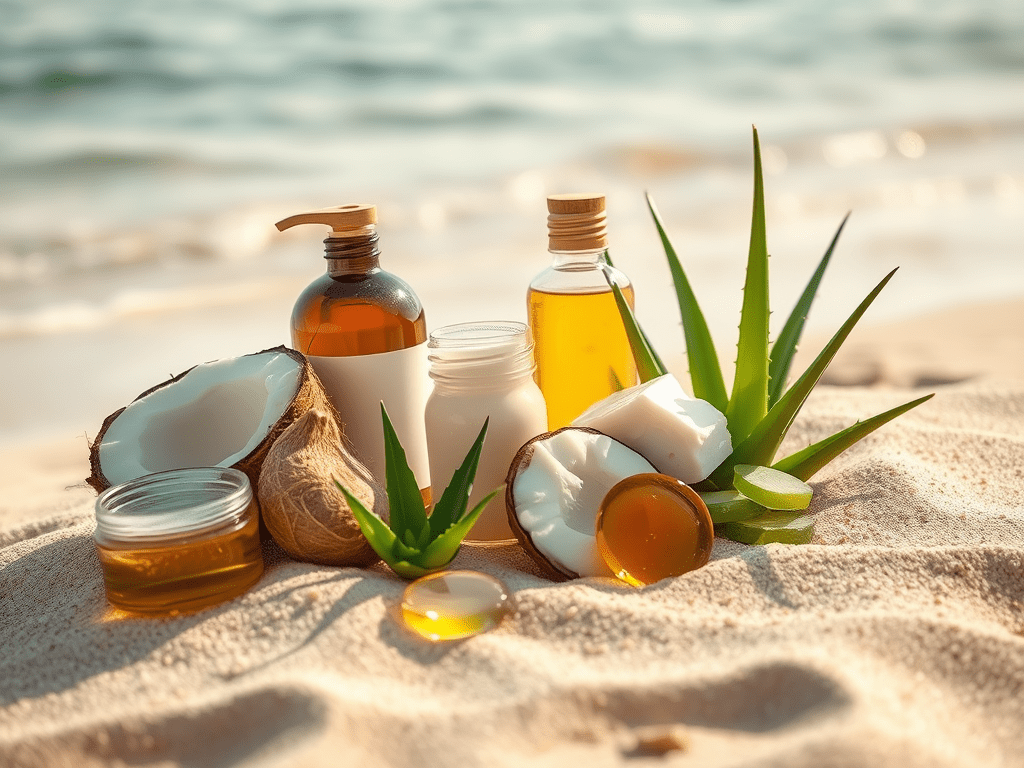
Look for sunscreens whose additives include natural oils and extracts, like coconut oil, shea butter, jojoba, and aloe vera. These can moisturize the skin and provide additional UV protection.
4. “Reef Safe”
Yesterday was our first beach day of summer. My daughter and I dug up all the sunscreens in our bathroom and read their active ingredients. We found that many of the good ones also had a logo on their label to identify it as “reef safe” or “reef friendly.” Makes sense that if it’s safe for us, it’s also good for wildlife.
Brands That Get It Right
Here are some products that I do recommend — for you, for your children, and for the aquatic life in the coral reefs below the waves:
- Alba Botanica
- All Good
- Attitude — A Canadian brand to boot
- Badger Balm
- Blue Lizard
- Goddess Garden
- Green Beaver — Their spray is a kid favourite around here. It’s one of the only sunscreens that my nephew with sensitive skin can tolerate. Bonus for being a Canadian brand.
- SunBum
- Tanit — Made in Canada
- Thinksport
Do you have a favourite clean sunscreen? Leave a comment below and we’ll check it out!
For a deeper dive — or to check your sunscreen in their database — I recommend the EWG Sunscreen Guide.

 Sustainable Steps
Leave a comment