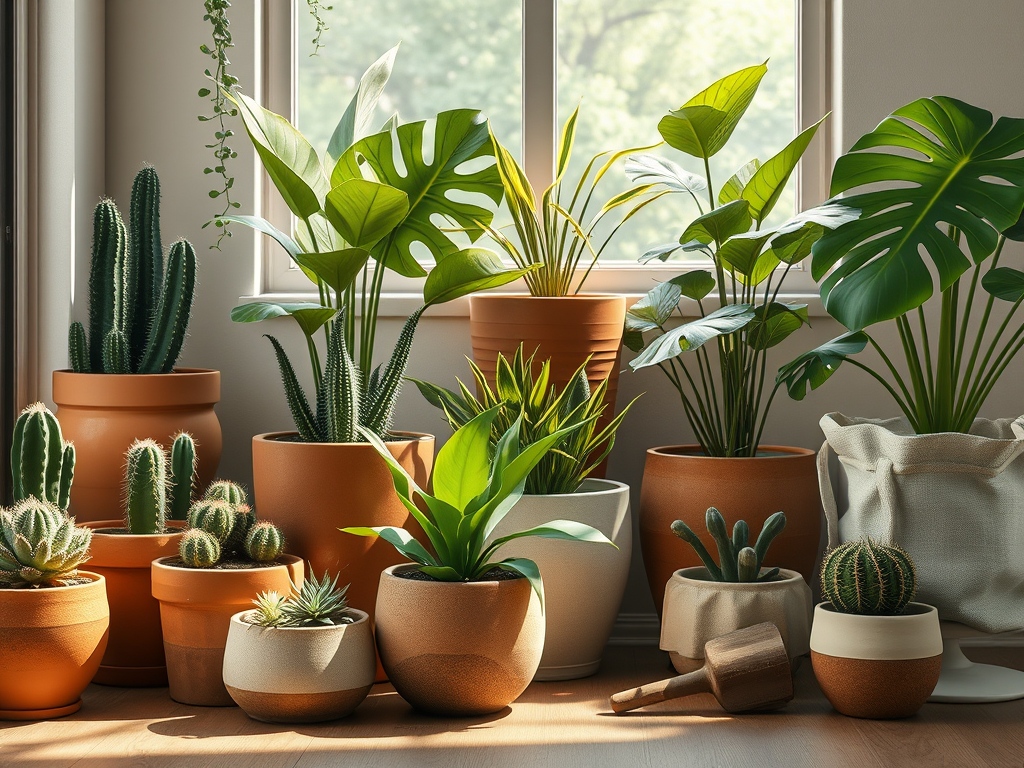
My daughter and I have crashed into the indoor gardening scene recently, turning our house into something resembling a jungle. To contain our new habit, I’m shopping for simple, sleek, sustainably crafted pots to make it look like we brought these into our house with purpose.
I opened the question on Facebook about where to get great pots at great prices, and got some advice that kicked off a weekend of shopping.
Some sustainable options we’ve found are:
Terracotta
Terracotta pots are made from natural clay, and are biodegradable. They’re porous — they allow soil to breathe while providing excellent drainage. This is great for cacti , succulents, bromeliads, and other plants that like their soil bone dry between watering.
Non-Porous Materials
For plants like monstera, philodendron, money tree, pothos, spider plants, and most others, the advice I’ve been given is to choose a non-porous material that will help the soil retain more of its moisture. While plastic works well for this, part of the joy of gardening (for me) is the positive ecological effect. The brands below both look nice and have a positive eco footprint.
Kanso Designs. They combine post-consumer plastic with stone and wood to make beautiful, lightweight planters. The best prices I’ve found have been at Frondly Plants — a Vancouver store I’m currently in love with.
Eco Forms — made out of rice hulls, these are lovely, earth-friendly designs. In Canada, I found them at Foli.
I also love plain old IKEA planters. IKEA isn’t a perfectly sustainable option, but they score serious points for planet consciousness across many categories, from zero hormones and antibiotics in their meat, through to using 100% renewable electricity in all of their factories, packaging, and distribution units. (Basically, they do enough right things that I feel like my money is well-spent there.) They have several smaller planters that are simple, reasonably priced, and work well with the streamlined look I’m trying to achieve for our jungle.
If I lived in Toronto, I would also browse the collection at JOMO — a plant studio devoted to sustainable practice. They have some very cute options.
Local and Handmade Pottery
Supporting local artists and vendors is a great way to reduce your carbon footprint. Many local artisans create beautiful, unique pots using sustainable practices. Check out local farmer’s markets or craft fairs for handmade pottery that adds character to your plant collection, and is good for your local economy to boot.
Alternatives to Plastic Liners
Some decorative pots come with drainage and saucers. Others require an inner liner — which typically means a plastic nursery pot.
So far, I’ve been getting by on reusing old plastic nursery pots that have come with plants. But we have to repot our monstera soon, and I don’t have a plastic pot the right size. So I’m actively looking for an eco-friendly alternative, such as:
Eco Forms Grower Series — I love everything about these biodegradable, non-plastic pots. They should last 5-10 years as a pot liner, which is great for the price. In Canada, they’re available online from Foli.
Washable Paper Bag Planters — from JOMO in Toronto
Root Pouch — an Oregon company that makes cloth plant bags out of recycled plastics and natural fibers. Their bags are porous, so not ideal for plants that need a lot of water retention (like peace lilies) and they’re not biodegradable (like terra cotta), but they’re reasonably priced and much better for the planet than a standard plastic liner. In Canada, the best price I’ve found has been from Indoor Farmer.
There are also coco coir options, that disintegrate (biodegrade) after a couple of years.
And I’m told that my favorite Vancouver plant store (Frondly) will be stocking some recycled plastic nursery pots later this year.
Reuse and Upcycle
Before purchasing new pots, go through your kitchen cupboards and see if there’s anything you don’t use that might work. Glass containers with lost lids, Mason jars, or even shoes can be upcycled into quirky plant pots. I was about to buy a pre-made propagation station for my daughter, when I realized that the chocolate mousse dessert at Costco comes in perfect little clear glass jars with plastic lids we can poke a hole in. Propagating never tasted so good.
Don’t Forget to Thrift
When I asked Facebook for planter recommendations, so many people suggested the Salvation Army as a great place to buy pots. I don’t know why I always forget this option, since reusing is always the most sustainable option. I think it’s also a really important message for the next generation — why buy new until you’ve looked around at what you can repurpose?

 Sustainable Steps
Leave a comment